
Cassandra Nelson is an Affiliate Fellow in Literature at the Lumen Center and an Associate Fellow at the University of Virginia’s Institute for Advanced Studies in Culture, who writes about faith, fiction, technology, and culture. She previously taught literature and composition at the United States Military Academy.
NEWS
FORTHCOMING: New book news coming soon.
DECEMBER 2025: Now out in Comment magazine: “That None Should Fall: Hierarchy’s Place in the Story of Salvation“–a brief introduction to Pseudo-Dionysius’s concept of hierarchy (as a way to make visible to children the loving care of a Providential God); a call to arms against despair and indifference; a prayer for all young people today.
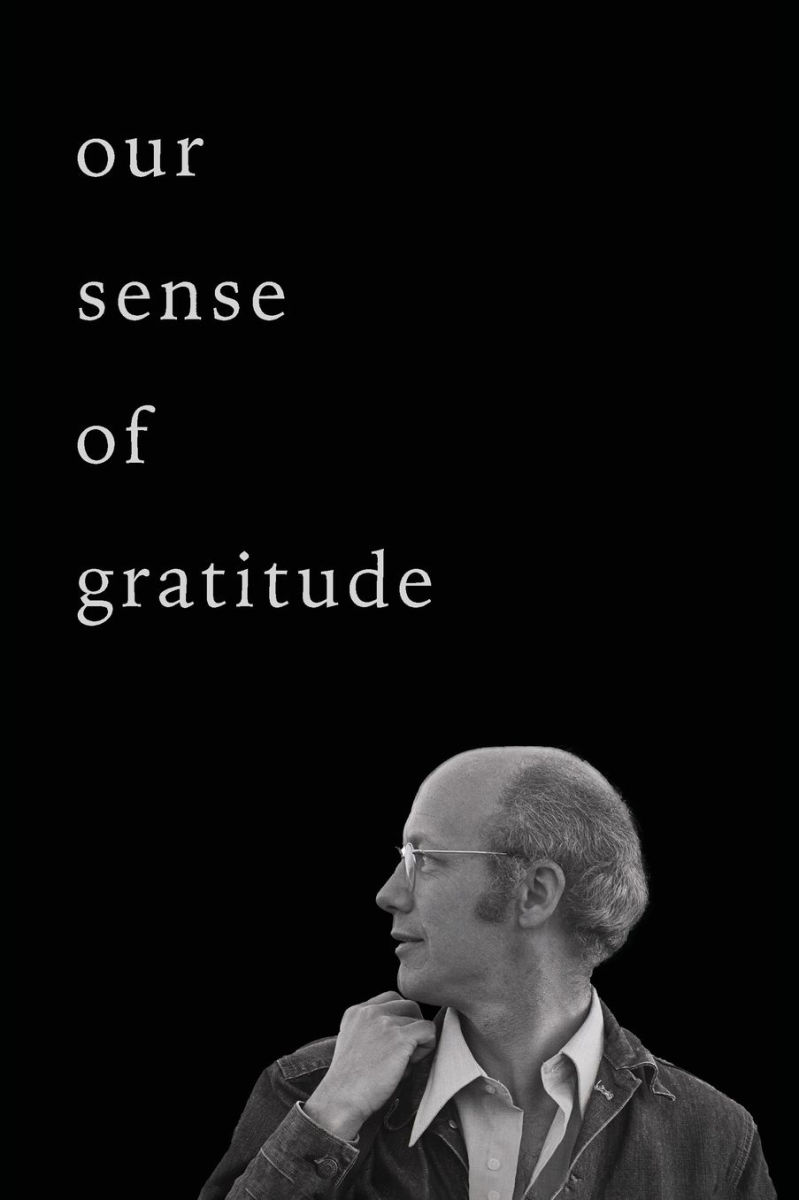
OCTOBER 2025: Few things make me happier than praising Christopher Ricks, and I am immensely grateful to Michael Autrey for editing a Festschrift, Our Sense of Gratitude: For Christopher Ricks, just out from Senex Press. I can hardly imagine what my life would be, professionally or otherwise, without the lively, perspicacious influence of one of the most esteemed literary and textual critics of the last century, and tried with my contribution to provide a window into daily life at the Editorial Institute in its heyday.
OCTOBER 2025: In a new podcast from The Raised Hand, Dixie Dillon Lane and I are skeptical of AI’s promises, to say the least.
OCTOBER 2025: This year The Raised Hand, a publication supported by the Consortium of Christian Study Centers, is asking writers, scholars, and teachers to answer the question: “What is the role of human educators in the age of AI?” My response is that teachers today have the opportunity to model for young people “what it looks like for an adult to care about ideas, order, and people in an age when indifference, chaos, and alienation reign.”
SEPTEMBER 2025: My review of Jonathan Haidt’s The Anxious Generation appears in the September issue of Perspectives on Science and Christian Faith. Haidt’s book shows that we already know how to raise healthy, resilient kids, and it’s high time to push back against tech companies remaking American childhood in their own image, with devastating results.
JUNE 2025: A Theology of Fiction was named the Wisconsin Book of the Month for June by the Milwaukee Journal-Sentinel (on Pentecost Sunday no less!), bringing welcome attention to Catholic literature’s surprising roots and ongoing legacy in Wisconsin.
APRIL 2025: Now out in Common Good magazine: “Race Isn’t Black and White,” an essay that attempts to understand why the colorful casta paintings found in colonial Latin America have no U.S. equivalents, and to discern whether current debates about race might have deeper, theological underpinnings.
APRIL 2025: On the Faith and Imagination podcast at Brigham Young University, Matthew Wickman and I talked about A Theology of Fiction and the unexpected ways that novels, secular education, and our own human idiosyncrasies can all draw us into a deeper relationship with God. Come for a free writing tip from Pulitzer Prize–winning New Yorker writer Louis Menand; stay for an eloquent meditation (from MW) on Mary Magdalen and just how elusive recognition can be.
MARCH 2025: In my (Internet) TV debut, it was a fast-paced, wide-ranging joy to think through ways that Catholic fiction and Christian faith more generally might help renew culture on The Andrew Klavan Show.
FEBRUARY 2025: My conversation with Mark Bauerlein of First Things about A Theology of Fiction about “Fiction and Last Things” is now online at FT magazine, Spotify, and anywhere podcasts are streamed.
FEBRUARY 2025: Three talks at Upper House–in response to the question Can Good Fiction Deliver What Technology Can’t?–are now online. YOUTUBE: Talk 1: “What we talk about when we talk about fiction and technology.” Talk 2: “Hard liberty and high windows.” Talk 3: “Consciousness and conscience: Two ways words can combat contemporary intrusions into the soul.” SPOTIFY: Talks 1, 2, 3.
JANUARY 2025: A Theology of Fiction is available for pre-order (and already shipping!) from Wiseblood Books. It can be purchased on Amazon closer to the official publication date of 1/28/25. Phil Klay, winner of the National Book Award for Redeployment (2014), calls the book “a fascinating and subtle exploration of the intersection of fiction and faith. The book offers wonderfully nuanced readings, rich historical details on a wide range of authors, and finally delivers a sensitive evocation of what fiction, at its best, offers us as human beings.” Andrew Klavan, author of The Kingdom of Cain and host of the Andrew Klavan Show, describes it as “a searching meditation on the Christian uses of fiction and the ways in which storytelling can establish a direct line into the human heart. Thoughtful and thought-provoking.”
DECEMBER 2024: My review of Michael O’Connell’s Startling Figures: Encounters with American Catholic Fiction is now out in the Winter issue of American Catholic Studies. His engaging and illuminating study shows how physical harm, both threatened and actual, along with a kind of interior violence that reveals to us just how far we can mentally stray from reality in a fallen world, prepares characters in (and, if all goes well, readers of) American fiction to receive God’s grace.
NOVEMBER 2024: In “Strengthen What Remains: The Ripple Effects of Higher Ed’s Obsession with Metrics,” I argue that administrators ought to resist the temptation to prioritize short-term financial concerns over larger and more lasting human goals. Civilization, it has become pretty clear by this point, is not going to maintain itself. So let us take John at his word (in the book of Revelation) and “strengthen what remains” by investing in churches, colleges, and the burgeoning world of Christian study centers where they overlap.
OCTOBER 2024: I’m honored to have the feature essay for the Autumn issue of Among Winter Cranes, journal of the Christian Poetics Initiative at Yale’s Rivendell Institute. I hope readers won’t be too put off by the technical sounding title. “Forming Souls Receptive to the Counsels of Reason and Value: A Teleological Approach to Christian Prose Poetics” is really an attempt to understand how it is, exactly, that fiction, a “gossamer web” of language and invention, “could possibly bring about invisible but real change in flesh-and-blood readers and their invisible but (we trust) also real souls.” Aristotle suggests it’s a matter of fine-tuning our souls to think and feel as the just man or woman would; Sister Mariella Gable makes a similar case in different terms, arguing for rightly ordered loves based on a correct assessment of the value of each created thing.
SEPTEMBER 2024: I’m thrilled to announce that I am now a Visiting Fellow in Literature at the Lumen Center, a new initiative of the Stephen and Laurel Brown Foundation that continues their mission—begun at Upper House in 2014—of serving Christian faculty and students in the UW-Madison community and beyond. The Lumen Center is a community of scholars deepening the dialogue between Christian thought and the academic disciplines through scholarship and public engagement.
DECEMBER 2023: My last publication of the year was “In Praise of Hidden Things,” a review of John Geometres’ Life of the Virgin Mary, for Current. Geometres wrote over a millennium ago, but his words have found their way into English for the first time only now. Although half of this beautiful scholarly edition was (literally) Greek to me, the other half was a treasure trove of wisdom about the nature of miracles—what makes them possible and perceptible—and revelation; about kenosis and contemplation; and about what it means to be Auspice Maria (“under the protection of Mary”) in time and in eternity.
NOVEMBER 2023: “Tradition and the Individual Christian Talent” in The Hedgehog Review considers two recent books about Catholic fiction and whether it can survive, let alone thrive, at a time when so many cultural and socioeconomic conditions seem not to lend themselves to either serious fiction or serious faith. The triumph of Catholic and Christian fiction, (I argue,) if there is to be one, must—like all spiritual victories—be a matter of internal disposition and discipline, undaunted by external hindrances and supplemented by the Holy Spirit.
OCTOBER 2023: On October 21, 2023, I was invited to participate in a panel on “Human Responses to Technology” at the Front Porch Republic conference in Madison, WI. My talk, entitled “From the Golden Mean to Median Humans: Technology and the Sinking Middle,” aimed to articulate how the insane, banal, AI-generated middle toward which we appear to be hurtling as a society is a far cry from Aristotelian excellence or the cardinal virtue of temperance. I argue that the inexhaustible newness of the Gospels, the Holy Spirit, and children offer a way to counter Sam Altman’s odd vision of “median humans.” (A recording is now available online).
OCTOBER 2023: “Who’s Afraid of the Still, Small Voice? The Case for Faithful Presence in Education,” for Common Good magazine, is “an attempt, necessarily partial and incomplete, to understand how most of the fun and many of the people have been squeezed out of education, and whether these might in fact amount to the same thing.” Readers can sign up for a free print issue of Common Good at the Made to Flourish website.
AUGUST 2023: “The Metaphysics of Birth,” a lengthy review-essay of Jennifer Banks’ Natality: Toward a Philosophy of Birth, finds much to admire in Banks’ treatment of the topic and in the concept of natality, by Hannah Arendt, that inspired it. Birth, I argue, is ultimately a physical event and a metaphysical one that invites us into the work of cooperating with God through grace.
JULY 2022: “Authority is Dead, Long Live Authority” for Comment offers an apologetics for authority, as Hannah Arendt defined it and Jesus both embodied and encountered it in the Gospels.

MAY 2022: “A Theology of Fiction” appeared in the April issue of First Things. A short book expanding this essay on Sister Mariella Gable and her incisive criticism on Catholic fiction–with new sections on paradox, satire, and vision–is now under contract with Wiseblood Books.
APRIL 2022: For the spring issue of The Point, I offered a response to their symposium, which asks, “What is the military for?” In my essay, “Readiness is Not All,” I try to understand the military’s current emphasis on readiness: what it is, how it’s defined in Army Doctrine and used in DoD rhetoric, and how an over-reliance on technology and metrics has led to unintended consequences for soldiers and families.
 Cassandra Nelson